Wide-field narrowband
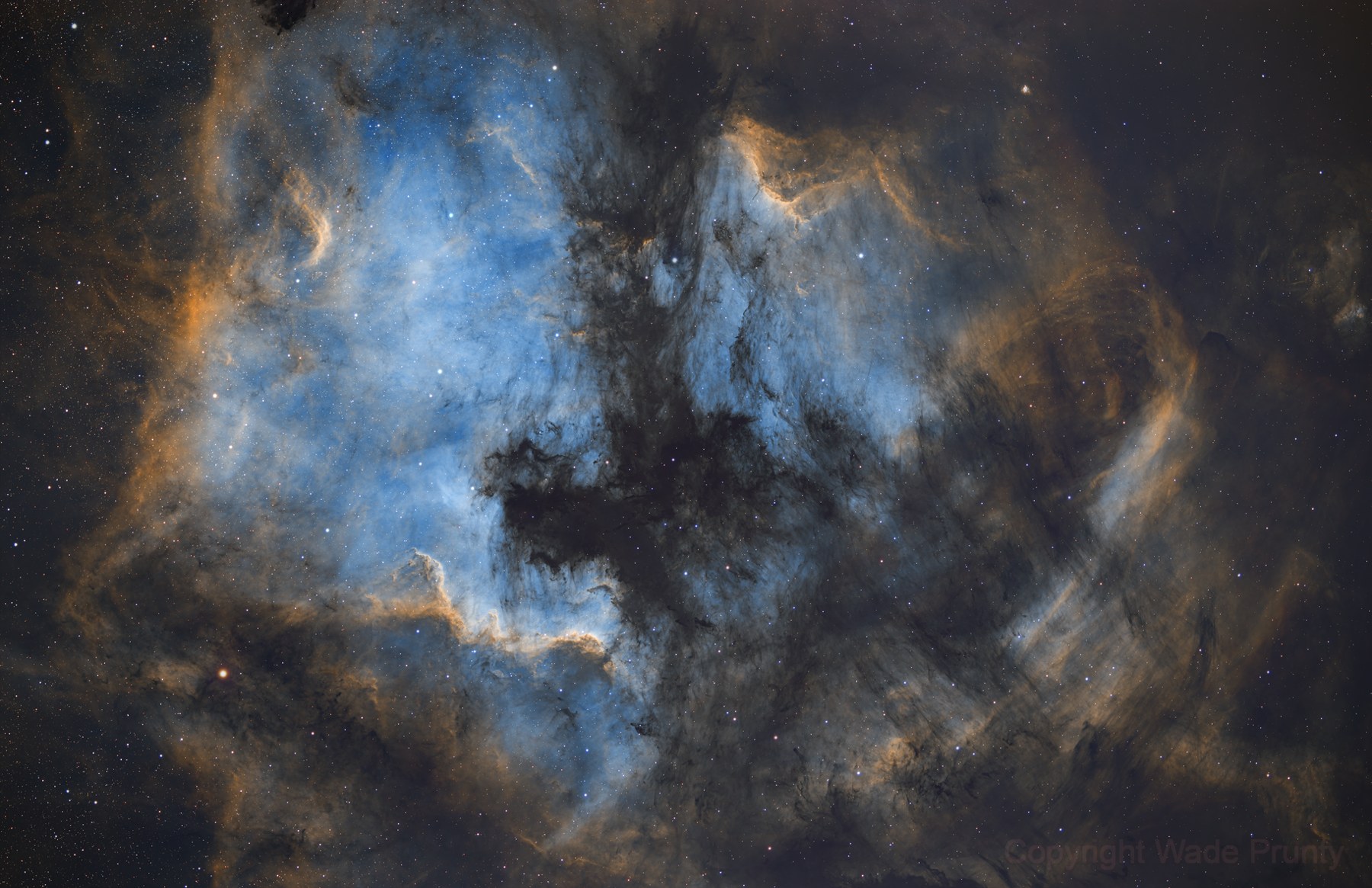
Radian Raptor 61 · ZWO ASI2600MM Pro · ZWO AM5 · Chroma Hα 5nm and SII/OIII 3nm filters. Used for the 2025 North America Nebula image.

Deep-sky astrophotography by Wade Prunty.
Captured under Texas skies, one clear night at a time.
Getting started, sorting out your equipment, or making more of the data you already have? I offer personal help with image acquisition and processing, built around where you are in the hobby.
Remote sessions · In-person help in East Texas
Ask about a session ↗Talk through your telescope, camera, mount, and how they work together.
Work through your acquisition process, from guiding and focus to exposures and calibration frames.
Get help with stacking, stretching, color, and processing your astrophotography data.
Contact me to discuss your goals, availability, and pricing.
My interest in astrophotography started with a telescope, a look at the Moon, and the desire to share what I was seeing. It led to long nights, plenty of mistakes, and a lasting fascination with photographing the sky.
OvertheSunASTRO is where I share those images and help others take their next steps, from setting up equipment to processing the final result.
Tell me about your equipment, your experience, and what you’re working toward.
Get in touch ↗Thirteen photographs, from my first deep-sky images to more recent projects. Open an image to explore the equipment, exposures, and processing behind it.
No images match this filter.
Work one-on-one with me on the equipment, acquisition, or processing questions standing between you and the images you want to make.
Getting started, sorting out your equipment, or making more of the data you already have? I offer personal help with image acquisition and processing, built around where you are in the hobby.
Remote sessions · In-person help in East Texas
Ask about a session ↗Talk through your telescope, camera, mount, and how they work together.
Work through your acquisition process, from guiding and focus to exposures and calibration frames.
Get help with stacking, stretching, color, and processing your astrophotography data.
Contact me to discuss your goals, availability, and pricing.
Discuss your setup or work through image processing together. Tell me what equipment and software you use, and what you want to accomplish.
Ask about hands-on equipment setup and acquisition help. Location, timing, and the scope of the session are arranged individually.
I know what it’s like to buy an ambitious setup and spend months learning how to get a result. Other photographers helped me through that process. I want to offer that same practical help to you.
Share your experience, equipment, software, and the problem or goal you have in mind.
We’ll discuss the format, scope, availability, and pricing before scheduling.
Focus on practical steps you can apply to your own setup and images.
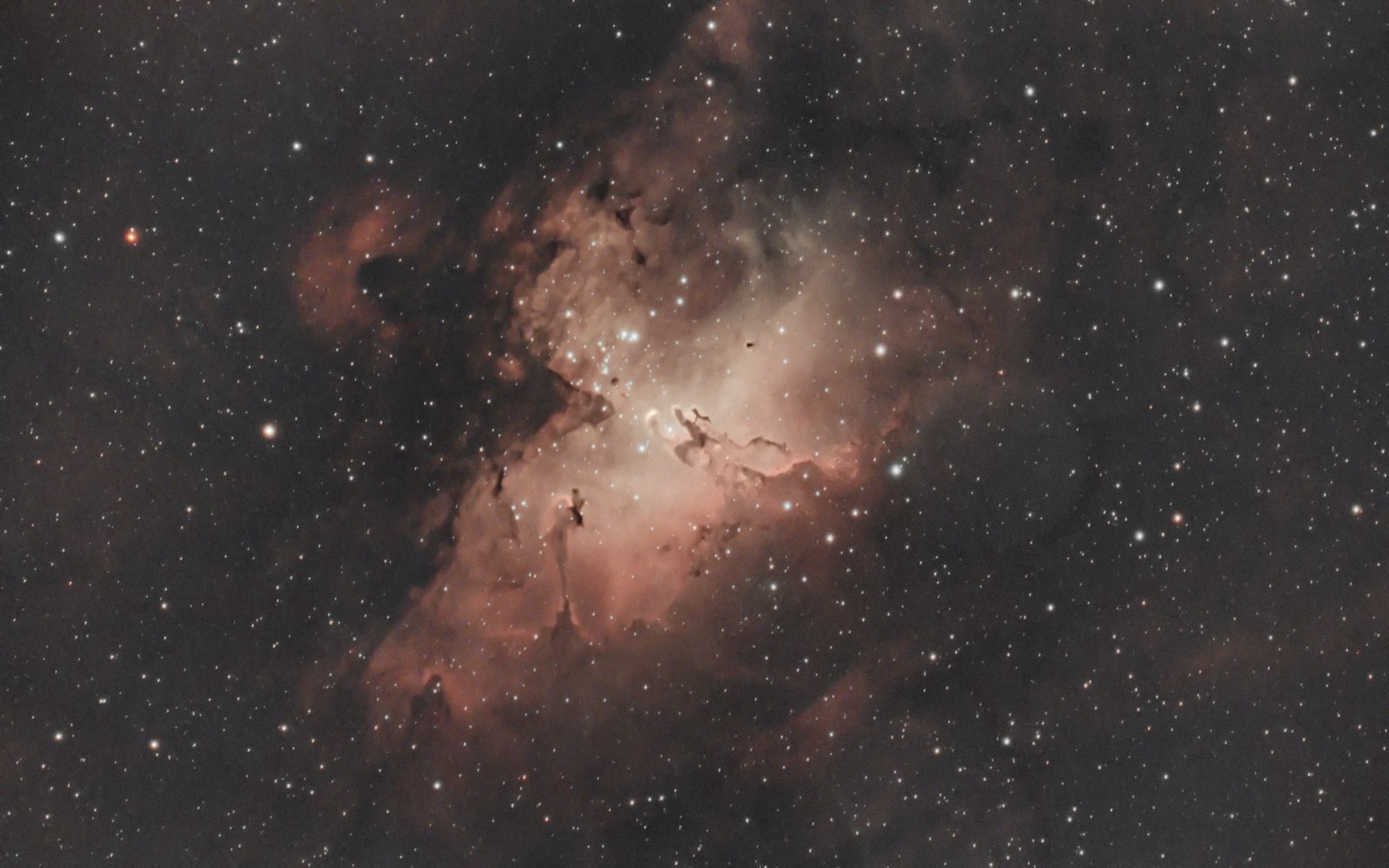
At ABC Kids Camp in Eunice, Louisiana, I shared astronomy and astrophotography with a group of preteens. Together, we turned a night under the stars into an image they could call their own.
The kids captured and processed this view of the Eagle Nebula and its Pillars of Creation. Fourteen ten-minute exposures added up to 2 hours and 20 minutes of light.
Explore Scientific supplied the ED102CF telescope for the project. We paired it with an iOptron CEM40 mount, a ZWO ASI2600MC Pro camera, a Radian Triad Ultra Quad filter, and an ASIAIR Pro.
Experiences like this are why I enjoy teaching: helping someone move from wondering how an image is made to taking part in making it.
Explore Scientific ED102CF · iOptron CEM40 · ZWO ASI2600MC Pro · Radian Triad Ultra Quad · ZWO OAG · ZWO ASI120 Mini · ZWO ASIAIR Pro
14 × 600 seconds. Processing tools: PixInsight, Topaz Labs Studio 2, and Adobe Camera Raw.
Before the finished photograph comes a night of collecting light. This is a real look at my ASIAIR Pro capture session on an iPad, with the Lagoon and Trifid nebulae in the field.
The screen shows the image preview, exposure progress, and a histogram. These are some of the tools we can work through together as you learn to understand what your setup is recording.
This is the acquisition stage. The frames collected during a session still need calibration, stacking, and processing to become a finished image.
From a July 2022 session after my move to East Texas. Nearby lights and high clouds were part of the challenge that night.
Get help with your capture process ↗Yes. We can start with choosing equipment or understanding how the pieces of your setup work together.
Yes. Let me know what you have captured and which processing tools you use so we can discuss a useful session.
Contact me with your goals. We’ll agree on scope and pricing before scheduling a session.
A telescope, a view of the Moon, and a desire to share what I saw.
My first telescope was a Sky-Watcher 8-inch Flextube Dobsonian. I didn’t know much about astronomy, and my first cloudy, hazy night outside did not go as planned. I saw absolutely nothing. But I wanted to learn how to use it.
After learning to collimate the mirrors and choose an eyepiece, I pointed it at the Moon again. Seeing that detail with my own eyes changed everything. The next thing I wanted to do was photograph it and share the experience.
In 2019 I bought my first setup designed around astrophotography. The long nights and mistakes came with enough success to keep me going. My first deep-sky image followed in early 2020.
I bought more telescope and mount than I was ready for as a beginner. It took about a year of learning before I could take my first deep-sky photo with that setup. I know how frustrating it can be to have the equipment and still struggle to get an image.
The Eagle Nebula became a favorite. After seeing Hubble’s image of the Pillars of Creation, I wanted to photograph them myself using narrowband imaging. In July 2020, I shared my first narrowband photograph that I had captured and processed myself.
I didn’t learn all of this alone. Astrophotographers sharing their knowledge on Twitch, along with long nights of equipment discussion and testing, helped me move forward. That experience is part of why I want to help others learn.
Today, this collection brings together images made under very different Texas skies, from Bortle 9 conditions in DFW to my Bortle 3 backyard in East Texas. I share the equipment and integration behind the images because the process matters as much as the finished result.
I also offer remote one-on-one instruction and in-person help in East Texas with equipment, acquisition, and processing.
Learn with me ↗Featured on AAPOD2 on January 11, 2026. Imaged and processed by Wade Prunty, with 35 hours and 35 minutes of integration.
Read the AAPOD2 feature ↗Tell me what you’re working on. For instruction, include your equipment, software, experience, and whether you prefer remote or in-person help.
Availability and pricing are arranged individually.
wadeprunty@overthesunastro.com ↗These are documented setups used in this portfolio. Equipment varies by project; open each photograph for its specific acquisition details.
Radian Raptor 61 · ZWO ASI2600MM Pro · ZWO AM5 · Chroma Hα 5nm and SII/OIII 3nm filters. Used for the 2025 North America Nebula image.
Sky-Watcher Esprit 120ED with 0.77× reducer · ZWO ASI2600MM Pro · iOptron CEM40-NUC. Used for the 2022 Soul Nebula image.
Celestron EdgeHD 9.25 with 0.7× reducer · ZWO ASI1600MM Pro · Software Bisque Paramount MX+. Used for the 2022 Eagle and Helix images.
Celestron RASA 8 · ZWO ASI2600MC Pro · Software Bisque Paramount MX+. Used for the 2021 Horsehead and California Nebula images.
Historical project setups, rather than a current inventory or shopping recommendation.
See the images and acquisition notes ↗